
Sunscreen vs Sunblock: Which One Is Better?

Quick Answer: Sunscreen uses chemical filters that absorb UV rays into the skin. Sunblock uses physical minerals like zinc oxide to reflect UV rays off the skin's surface. The right choice depends on your skin type, daily habits, and how much sun exposure you actually get.
Walk into any pharmacy and you will find shelves packed with sun protection products. Some say sunscreen. Some say sunblock. Many seem to claim both. Most people grab whatever looks familiar and move on without a second thought.
But these two are not the same thing. Knowing the difference could genuinely change how protected your skin is over the years.
What Is Sunscreen?
Sunscreen is a chemical sun protection product. It works by soaking into the upper skin layer and absorbing UV radiation before it causes cellular damage. Common active ingredients include avobenzone, octinoxate, and oxybenzone. These compounds catch UV rays and convert them into a tiny amount of heat that releases harmlessly from the body.
One thing most people get wrong: sunscreen needs time to work. Apply it at least 15 to 30 minutes before heading outside. Without that window, the active ingredients have not fully bonded with your skin yet.
On the upside, the texture is hard to beat. Sunscreen is lightweight, absorbs fast, and leaves no residue. If you wear foundation or prefer something invisible under moisturizer, it fits right into a daily skincare routine without much effort.
Best for: Oily, combination, or acne-prone skin. Daily wear under makeup. City routines with moderate sun exposure.
What Is Sunblock?
Sunblock works on the surface, not underneath it. Instead of absorbing into skin, it physically sits on top and deflects UV rays before they get anywhere near the dermis. The minerals doing the heavy lifting are zinc oxide and titanium dioxide.
Because nothing needs to activate or absorb, sunblock works the moment you apply it. No waiting. That alone makes it the go-to for outdoor activities, days at the beach, or anytime you need to step outside immediately after applying.
The historical knock on sunblock is texture. It runs thicker and, on deeper skin tones, can leave a noticeable white cast. That said, modern formulas are considerably more refined than older versions, and a lot of people who wrote off sunblock years ago have found newer options surprisingly wearable.
Best for: Sensitive skin, reactive skin conditions like rosacea, children, pregnant women, outdoor and water activities.
Sunscreen vs Sunblock: What Actually Sets Them Apart
|
Feature |
Sunscreen |
Sunblock |
|
How it works |
Absorbs UV rays chemically |
Reflects UV rays physically |
|
Activation time |
15 to 30 minutes |
Immediate |
|
Texture |
Lightweight, invisible |
Thicker, possible white cast |
|
Active ingredients |
Avobenzone, oxybenzone, octinoxate |
Zinc oxide, titanium dioxide |
|
Skin absorption |
Yes |
No |
|
Best suited for |
Daily wear, oily skin, under makeup |
Sensitive skin, outdoors, water |
Both types can deliver broad-spectrum protection, which means they cover both UVA rays that age skin over time and UVB rays that cause sunburn. The type you choose is really about lifestyle and skin compatibility, not superiority.
What Is SPF in Sunblock and Sunscreen?
SPF stands for Sun Protection Factor. It measures how well a product filters UVB rays, the ones that burn and contribute most directly to skin cancer risk.
Here is a practical way to think about it. If your bare skin starts burning after about 10 minutes of sun exposure, SPF 30 theoretically extends that to 300 minutes. In real life, though, sweating, swimming, and touching your face all reduce that window, so the actual protection is always a bit lower than the math suggests.
-
SPF 15 blocks around 93% of UVB rays. Fine for mostly indoor days with brief outdoor time.
-
SPF 30 blocks around 97%. This is the minimum dermatologists recommend for regular outdoor use.
-
SPF 50 and above blocks 98 to 99%. Worth it for extended outdoor exposure, high altitudes, or fair and sensitive skin.
No sunscreen or sunblock blocks UV rays completely, which is why reapplying every two hours is non-negotiable.
Sunblock Benefits and Uses
Sunblock does more than prevent a sunburn. Daily physical protection meaningfully reduces the lifetime risk of melanoma and non-melanoma skin cancers. Dermatology research also points to UV exposure as responsible for up to 80% of visible facial aging, including fine lines, dark spots, and the kind of skin laxity that builds silently over decades.
For people with sensitive skin, rosacea, eczema, or skin recovering from a procedure, the fact that mineral sunblock does not absorb into the body makes a real difference. Less risk of irritation, fewer reactions, and no concerns about chemical interaction with compromised skin barriers.
It also holds up better in the sun. Physical formulas are generally more photostable than chemical ones, meaning they do not degrade as quickly under prolonged heat and light exposure.
UV Sunscreen and How It Protects Skin
Broad-spectrum UV protection targets two distinct types of radiation.
UVA rays reach deep into the dermis, the structural layer of skin where collagen and elastin live. They break those fibers down quietly over years, producing wrinkles, sagging, and uneven tone. The tricky part is that UVA rays show up year-round, pass through cloud cover, and come straight through glass. You are getting UVA exposure sitting next to a car window or working beside an office window, even in January.
UVB rays are more surface-level but more immediately damaging. They are what causes sunburn and play a bigger role in triggering skin cancer mutations.
A good broad-spectrum product handles both. Applied daily and reapplied consistently during outdoor exposure, it significantly cuts down on the UV damage that stacks up over a lifetime. Dermatologists recommend SPF 30 or higher every day, not just beach days.
Sunscreen vs Sunblock: Which Is Better for Your Skin?
There is no universal winner. The better product is whichever one actually suits your skin and gets used consistently.
Sunscreen is likely the better fit if:
-
You wear makeup daily and need a lighter base layer
-
Your skin runs oily or acne-prone
-
You want an invisible formula that does not add texture
-
You spend most of your time indoors with occasional outdoor exposure
Sunblock is likely the smarter pick if:
-
Your skin is sensitive, dry, or prone to reactions
-
You spend extended time outdoors or in and out of water
-
You want something that works on contact without a wait
-
You are pregnant, or buying for young children
-
You are post-procedure and need gentle, non-absorbing protection
The one you use every morning without skipping is the right one. Daily consistency matters far more than which category it falls into.
Dermatologist-Recommended Products From Careapex Health
Careapex Health carries two solid options worth considering if you are building or upgrading your sun protection routine.
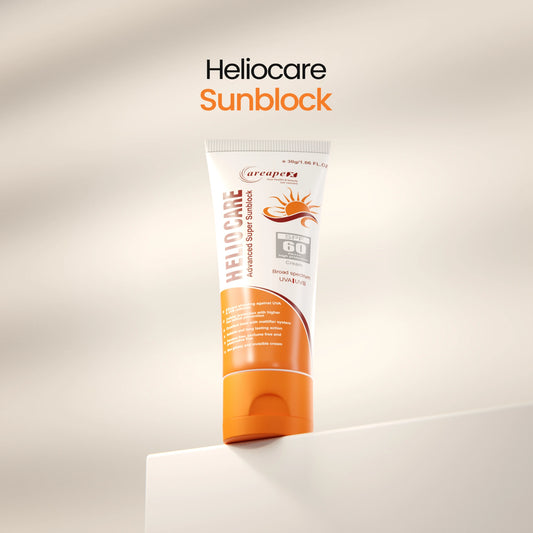
Heliocare Sun Block SPF60
The Heliocare Sun Block SPF60 is a broad-spectrum physical formula with SPF 60. Heliocare carries a strong clinical reputation, and this sunblock is a reliable choice for extended outdoor exposure, fair or sun-sensitive skin, post-procedure recovery, and anyone who wants high-SPF mineral protection without rotating between multiple products.
Heliopex Sunscreen
The Heliopex Sunscreen is built for daily use. It sits comfortably under makeup, absorbs without a greasy finish, and does not disrupt the rest of a morning skincare routine. A practical option for consistent everyday coverage in an urban setting.
Both are available at Careapex Health.
Conclusion
Sunscreen and sunblock are not competing products. They are different tools for the same job, and neither is better in absolute terms.
Sensitive skin, outdoor lifestyles, and a preference for mineral formulas point toward sunblock. Oily skin, daily makeup use, and a need for something light and invisible point toward sunscreen.
The only thing that genuinely matters is picking one and using it every single day. UV damage is slow and cumulative. Most people do not notice it until years of it are already done.
The Heliocare Sun Block SPF60 and Heliopex Sunscreen, both available at Careapex Health, give you a strong starting point on either side.
Start today. Your skin a decade from now will reflect it.
Explore More:
Best Sunscreen Cream For Face in Pakistan
Frequently Asked Questions
1. Which is better for the face, sunscreen or sunblock?
Skin type determines this more than anything. Mineral sunblock works better for sensitive, dry, or reactive skin since it sits on the surface and rarely causes irritation. Chemical sunscreen suits oily or acne-prone skin better because it absorbs fast and does not feel heavy. Either way, go broad-spectrum and SPF 30 or higher for daily facial use.
2. Can I use sunblock and sunscreen at the same time?
Using both does not add extra protection. Pick the one that fits your skin and apply it properly. If you layer for any other reason, put physical sunblock on last since it needs to sit on top to work.
3. How often should I reapply sunscreen or sunblock?
Every two hours during outdoor exposure. After water or heavy sweating, reapply immediately rather than waiting. Both conditions strip away protection faster than time alone does.
4. Does higher SPF mean I can skip reapplication?
No. SPF only measures protection strength per application, not how long it lasts before you need to reapply. SPF 100 needs reapplication on the same schedule as SPF 30. Higher SPF is useful if you tend to apply less than the recommended amount, but it does not change the two-hour rule.
5. Is sunblock or sunscreen better for dark or brown skin tones?
UV damage, hyperpigmentation, and skin cancer risk affect all skin tones. Chemical sunscreen is often preferred by people with deeper skin tones because it does not leave a white cast. Tinted and micronized mineral sunblock formulas have improved enough that they are now a practical option across the board. SPF 30 or higher daily applies regardless of skin tone.