
Best Face Wash for Acne-Prone Skin

Best Face Wash for Acne-Prone Skin: A Guide That Actually Helps
Acne-prone skin does not give you much room for error. One wrong cleanser and you are back to square one, dealing with fresh breakouts, a compromised barrier, and skin that feels more reactive than it did before you washed it. Most people have been through this cycle more than once. The good news is that finding the best face wash for acne-prone skin is less about luck and more about knowing what your skin actually needs.
This guide covers the ingredients that work, what quietly makes things worse, and how to build a cleansing routine your skin will finally respond to.
Why Your Cleanser Sets the Tone for Everything Else
Think of cleansing as the reset button. Whatever you apply after your face wash sits on whatever your cleanser leaves behind. If your acne face wash is stripping your barrier or leaving residue behind, your serums and treatments are working against a compromised surface from the start.
For acne-prone skin, the stakes are higher. Harsh formulas disrupt the acid mantle, the skin's thin protective layer that regulates bacteria and moisture. Once that layer is weakened, oil production spikes, pores become easier to clog, and breakouts come faster. A lot of people are dealing with cleanser-driven acne without realizing it.
Ingredients Worth Paying Attention To
What Actually Works
-
Salicylic acid is the starting point for any serious face wash for acne prone skin. It is oil-soluble, so it gets inside the pore instead of just cleaning the skin surface. At concentrations between 0.5% and 2%, it dissolves the buildup of sebum and dead cells that causes blockages before they become visible breakouts.
-
Niacinamide is quieter in its results but consistently effective. It brings down surface inflammation, regulates oil output, and helps fade post-acne marks over time. Skin that cycles through breakouts and recovery benefits from it considerably.
-
Tea tree extract offers antibacterial support against the bacteria primarily responsible for inflammatory acne. It works best alongside other actives rather than as the sole treatment ingredient.
-
Zinc compounds help moderate oil production and reduce the intensity of inflamed lesions. They are well-tolerated by most skin types, including sensitive skin that reacts to stronger actives.
What to Leave on the Shelf
Synthetic fragrance is one of the most common triggers for reactive acne-prone skin, even in rinse-off products. Denatured alcohol and sulfates like sodium lauryl sulfate strip the barrier so aggressively that sebaceous glands compensate with more oil production. Certain silicones and oils, coconut oil and isopropyl myristate being the most common, physically block pores in some skin types and belong nowhere near a cleanser for acne prone skin.
Choosing the Best Face Wash for Acne and Pimples
The best face wash for acne and pimples is not the strongest one. It is the one that cleans thoroughly, addresses congestion at the source, and does not create a new problem in the process.
pH matters more than most brands admit. A cleanser should sit between 4.5 and 5.5 to work with your skin rather than against it. Most drugstore cleansers are alkaline, and that alone is enough to disrupt barrier function over time.
Non-comedogenic formulation is non-negotiable. This means the product is tested to confirm it will not block pores, which should be a basic requirement for anything marketed as a face wash for acne prone skin.
One question that comes up often: can the best face wash for normal skin also work for acne-prone skin? Often, yes. The formulation principles overlap significantly. Normal skin needs lower active concentrations, but the same pH, fragrance-free, and non-comedogenic requirements apply. A well-formulated acne free face wash can genuinely work across both skin types.
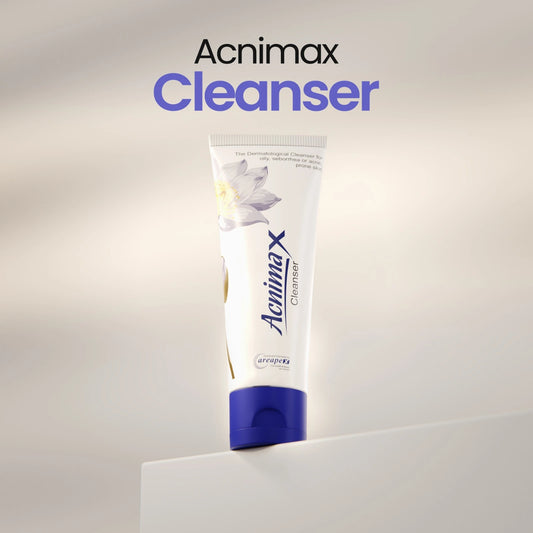
Careapex AcniMax Cleanser: Built With a Specific Skin Type in Mind
Careapex created the AcniMax Cleanser for people who break out regularly and need a cleanser that works at the pore level without the harshness of high-concentration clinical products.
The AcniMax Cleanser addresses congestion, controls excess oil, and reduces the inflammation that makes active acne more visible. It is formulated for twice-daily use and designed to support long-term skin clarity rather than short-cycle results. Careapex is transparent about what goes into the formula, which matters when you are trying to find something that works consistently rather than just occasionally.
How to use it: Apply a small amount to damp skin, work into a light lather for 30 to 60 seconds using gentle circular movements, and rinse with lukewarm water. Consistent twice-daily use is where results build. Most users notice clearer skin and fewer breakouts within three to four weeks, aligned with the skin's natural 28-day cell turnover.
What "World Best Face Wash" Actually Means in Practice
The term gets used carelessly in skincare marketing. In real terms, the world best face wash for acne-prone skin is simply the one that delivers consistent results without accumulating damage. That means proven actives at effective concentrations, a barrier-safe pH, a non-comedogenic formula, and tolerability across extended daily use. Careapex built the AcniMax Cleanser around those criteria.
Explore more:
Top 10 Best Face Wash in Pakistan at Best Prices (2026)
Conclusion
The best face wash for acne is not the harshest option or the one with the most dramatic claims. It is the one your skin consistently responds to. For acne-prone skin, a well-formulated, pH-balanced, active-driven cleanser is where lasting improvement starts. If your current routine is not delivering, the cleanser is always worth looking at first.
Frequently Asked Questions
1. What is the best face wash for acne-prone skin?
The best face wash for acne-prone skin is pH-balanced between 4.5 and 5.5, non-comedogenic, fragrance-free, and contains actives like salicylic acid or niacinamide. It should clean the pores without stripping moisture. Careapex AcniMax Cleanser meets these criteria and is formulated for consistent daily use on breakout-prone skin.
2. What ingredients should I look for in an acne face wash?
Salicylic acid (0.5% to 2%), niacinamide, tea tree extract, and zinc compounds are the most effective actives. They address excess sebum, bacterial activity, and pore congestion directly. Avoid synthetic fragrance, alcohol, and sulfates as these damage the skin barrier and often worsen acne over time.
3. How often should I use a face wash for acne-prone skin?
Twice daily is the standard clinical recommendation. Morning cleansing removes overnight oil and bacteria. Evening cleansing removes environmental pollutants, sunscreen, and makeup. Washing more frequently disrupts barrier function and usually increases oil production.
4. Can I use an acne face wash on normal skin?
Yes. A properly formulated acne face wash works well on normal skin as a preventive cleanser. The best face wash for normal skin shares the same foundational qualities: balanced pH, non-comedogenic ingredients, and no harsh actives. Ensure active concentrations are appropriate for non-reactive skin types.
5. How long before results are visible?
Noticeable improvement in skin clarity and breakout frequency typically appears within three to four weeks of consistent twice-daily use. This aligns with the skin's 28-day cell turnover cycle. Sustained improvement over 8 to 12 weeks reflects genuine long-term progress.
6. Is Careapex AcniMax Cleanser suitable for sensitive acne-prone skin?
Yes. The AcniMax Cleanser is formulated for daily use including on sensitive skin types. It delivers active-level results without the barrier irritation associated with stronger clinical treatments. Available at careapexhealth.com.